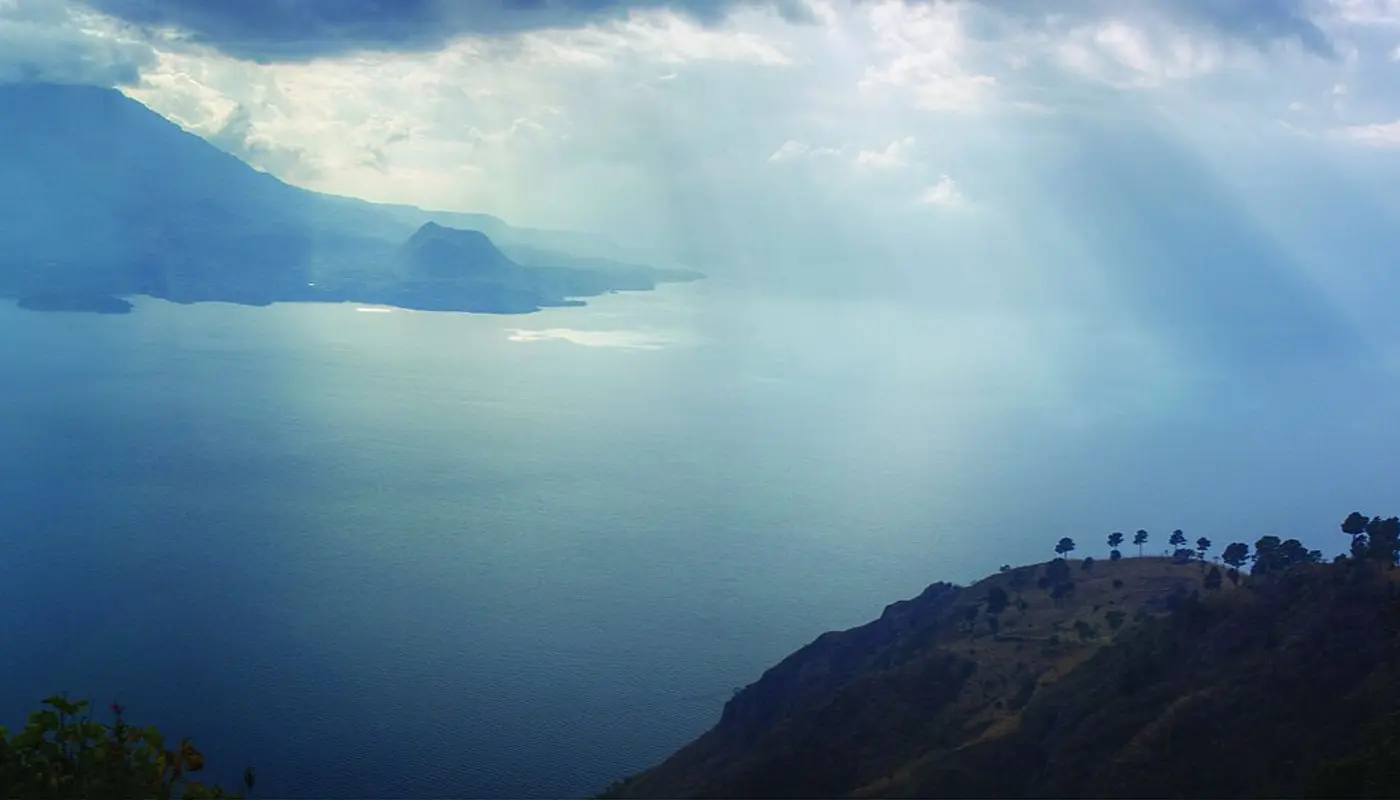
Granada is the easiest three days you will spend in Nicaragua, and one of the few Central American colonial cities where the setting outdoes the architecture rather than the other way round.
The centre itself is compact and low-slung: single-storey houses in ochre and blue, a cathedral with a facade the colour of a wedding cake, and a walkable grid that takes about twenty minutes to cross end to end. That size is the point. You are not here to hunt down scattered sights across a sprawling capital — you are here to use the city as a base while you go out onto the water and up the hill.
What Actually Works
The isletas are the real draw. Some 365 tiny islands sit just offshore in Lake Nicaragua, the debris field of an old Mombacho eruption, and a good number of them are inhabited — one family to an island in some cases, with a hammock strung between two trees and a dock for the boat. Hire a panga from the Cabildo dock rather than booking a tour through your hotel; it is a third of the price and the boatmen know which channels have howler monkeys reliably sitting in the branches at that hour. Two hours is enough. Longer if you want to stop at Isla San Simian for a walk-through of the private wildlife rescue that shares the island with its owners.
Mombacho volcano itself is the other half of the case for Granada. A truck takes you up a steep dirt road to the cloud forest reserve near the crater rim, and from there a marked trail circles through vegetation that is noticeably cooler and wetter than the city below — worth doing specifically because the temperature drop is so abrupt it feels like a different country. The volcano is dormant but not decoratively so; there are still active fumaroles on the shorter trail, which is the one to take if you have limited time or limited fitness.
The Honest Caveat
Granada in the rainy season, roughly May to October, is a harder sell. Afternoon downpours are frequent enough to shorten your window on the lake, and Mombacho’s cloud forest — appealing in theory — can mean walking through fog with visibility down to a few metres, which defeats the purpose of the crater views. If you are set on doing both the isletas and the volcano properly, aim for December through April.
The other reservation is more about temperament than weather: Granada is touristy in the specific way that colonial towns near a capital become touristy, with horse-drawn carriages circling the central park and a strip of restaurants aimed squarely at visitors. That is not a reason to skip it. It is a reason to spend your evenings in the streets one block back from the park, where the food is cheaper and better.
This suits travellers who want scenery without exhaustion — people happy to spend one day on water, one day on a volcano, and one day doing very little in a plaza. It is a poor fit if you want nightlife or if you are trying to avoid other travellers entirely.
Newsletter
Your escape plan — Central America
Get Between Seas in your inbox. No spam, and one click to leave.
Twice a month · Unsubscribe any time. We never sell or rent your address; read the privacy policy.